


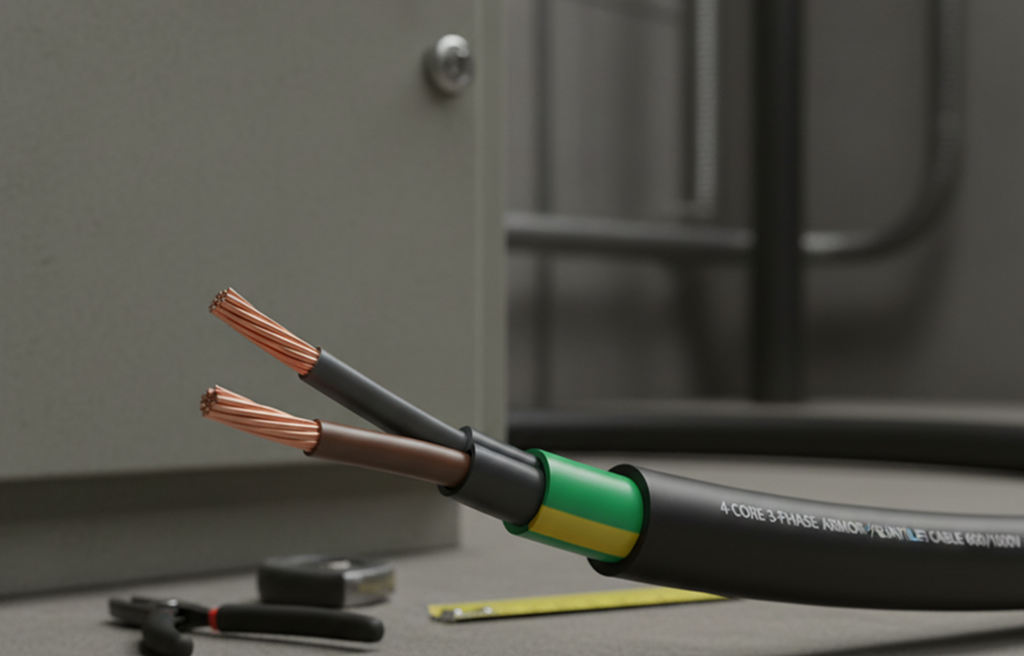
4 core cable plays an important role in three-phase electrical systems, delivering dependable power distribution and ensuring safe, efficient operation across industrial, commercial, and residential installations. Knowing the different types of 4 core cable, proper installation techniques, and essential safety practices helps maximise performance, extend cable lifespan, and prevent costly downtime. Let’s break down the key types, best practices, and safety tips to help you get the most out of your 4 core cable installations.
Table of Contents
- What Is a 4 Core Cable
- Types of 4 Core Cable
- Best Practices for 4 Core Cable Installation
- Safety Considerations
- Frequently Asked Questions
- Conclusion
What Is a 4 Core Cable
A 4 core cable consists of four insulated conductors within a single sheath. Typically, these include three phase conductors and one neutral or earth conductor. This configuration is ideal for three-phase systems used in industrial plants, commercial buildings, and large residential complexes.
Using a 4 core electrical cable allows efficient power distribution while minimizing the number of individual cables required. It also reduces installation complexity and improves safety when properly installed.
Types of 4 Core Cable
1. 4 Core Electrical Cable
A standard 4 core electrical cable is suitable for general-purpose wiring in three-phase systems. It comes with PVC insulation and sheath, providing flexibility and ease of installation in indoor or controlled environments. These cables are cost-effective and widely used for low to medium voltage applications.
2. 4 Core Armoured Cable
The 4 core armoured cable includes a protective metal layer, usually steel, which safeguards the conductors from mechanical damage, impact, and rodents. Armoured cables are ideal for outdoor installations, underground wiring, or areas with heavy machinery. They offer added durability and long-term reliability in harsh environments.
3. 4 Core Power Cable
A 4 core power cable is designed to carry higher current loads for industrial machinery, transformers, and large electrical panels. These cables often feature XLPE insulation or specialized sheathing to withstand high temperatures and provide efficient power transmission over long distances.
4 Core Cable Types Summary
| Type | Features | Applications |
| Electrical | PVC insulation, flexible | General-purpose indoor wiring |
| Armoured | Steel protection, durable | Outdoor, underground, industrial |
| Power | High current, XLPE insulation | Industrial machinery, transformers |
Best Practices for 4 Core Cable Installation
Proper 4 core cable installation is essential for safety, performance, and compliance with electrical regulations. Following best practices ensures reliable operation, reduces the risk of faults, and extends the lifespan of your cable systems. Here are key considerations to keep in mind:
1. Correct Sizing
Selecting the right cable size is critical to handle the expected current load without overheating. Undersized cables can cause excessive voltage drop, energy loss, and potential fire hazards. Always calculate the required size based on load, distance, and installation environment to ensure safe and efficient operation.
2. Bending Radius
Maintaining the recommended bending radius prevents damage to the cable insulation and conductors. Sharp bends can weaken the internal structure and reduce the cable’s performance over time. Always follow manufacturer guidelines and use proper tools or supports when routing cables around corners.
3. Secure Placement
Properly securing your cables prevents strain at joints and reduces wear caused by vibration or movement. Use cable trays, conduits, or clamps to keep cables neat and organized. Well-planned placement also simplifies maintenance and reduces the risk of accidental damage.
4. Earthing
Ensuring correct earthing is essential, especially for 4 core armoured cable, to prevent electric shock and maintain system integrity. The armoured layer should be bonded to the main earth point following electrical regulations. This provides a safe path for fault currents and improves overall system reliability.
5. Environmental Protection
Cables installed outdoors or underground must withstand environmental challenges such as moisture, UV exposure, and temperature fluctuations. Using UV-resistant or waterproof sheaths ensures long-term durability and prevents insulation degradation. Choosing the right cable for the environment protects both the installation and the connected equipment.
Safety Considerations
When handling 4 core electrical cable, always follow safety guidelines:
- Switch off power before installation or maintenance.
- Wear appropriate personal protective equipment.
- Avoid sharp bends or compressing the cable.
- Inspect cables for damage before use.
Adhering to safety practices ensures the longevity of the cable and prevents hazards during operation.
Frequently Asked Questions
1. Can 4 core cable be used in residential installations?
Yes, it is suitable for large residential setups or three-phase connections for heavy appliances.
2. What is the difference between armoured and non-armoured 4 core cable?
Armoured cables have a metal layer for mechanical protection, while non-armoured cables are lighter and suited for indoor use.
3. How do I choose the right 4 core power cable?
Consider the current rating, voltage, environmental exposure, and installation type.
4. Can 4 core cable be laid underground?
Yes, but armoured and water-resistant types are recommended to prevent damage.
Conclusion
A 4 core cable is a vital component in three-phase electrical systems, delivering reliable power distribution and supporting safe, efficient operation across industrial, commercial, and residential installations. Choosing the right type, such as electrical, armoured, or power cable, and following proper installation practices, including correct sizing, secure placement, and proper earthing, ensures maximum performance and extended cable lifespan. Understanding 4 core cable types and best practices helps maintain consistent power delivery, reduce maintenance needs, and improve overall system reliability.

