


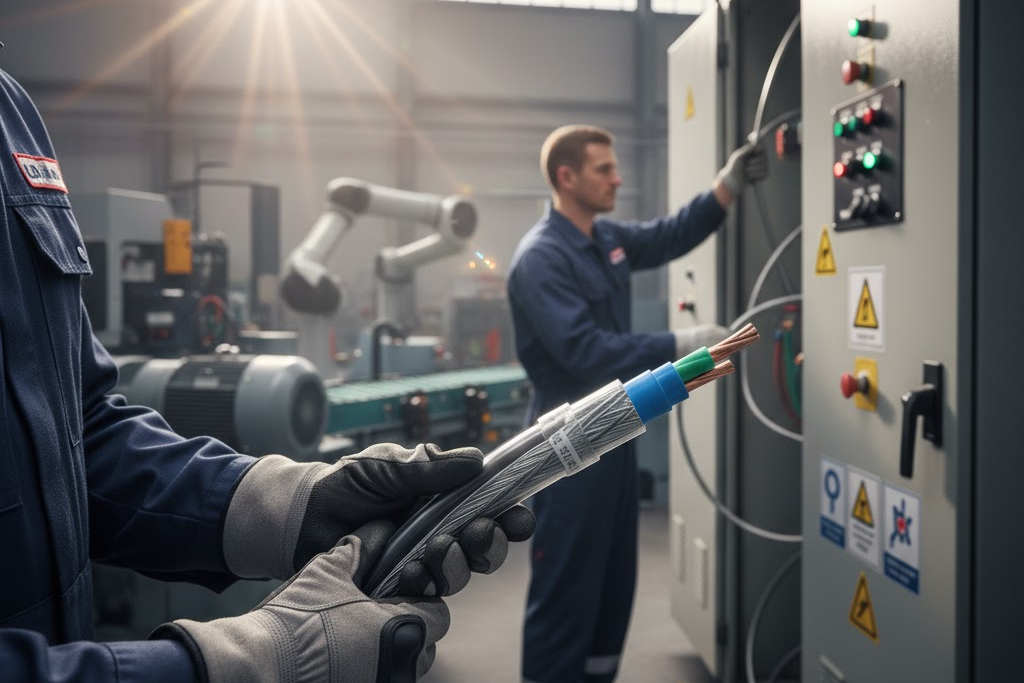
SY cable is an important part of keeping industrial wiring running smoothly. Its steel-wire braid, clear PVC sheath, and reinforced construction make it an essential choice for control systems requiring both durability and adaptability. From automated systems to heavy-duty factory equipment, SY cable ensures consistent performance in high-demand scenarios.
Table of Contents
- What Is SY Cable?
- Construction & Industry Standards
- SY Cable Performance Metrics
- Benefits in Industrial Environments
- Common Use Cases
- Installation Tips
- Limitations to Be Aware Of
- Frequently Asked Questions
- Final Thoughts
What Is SY Cable?
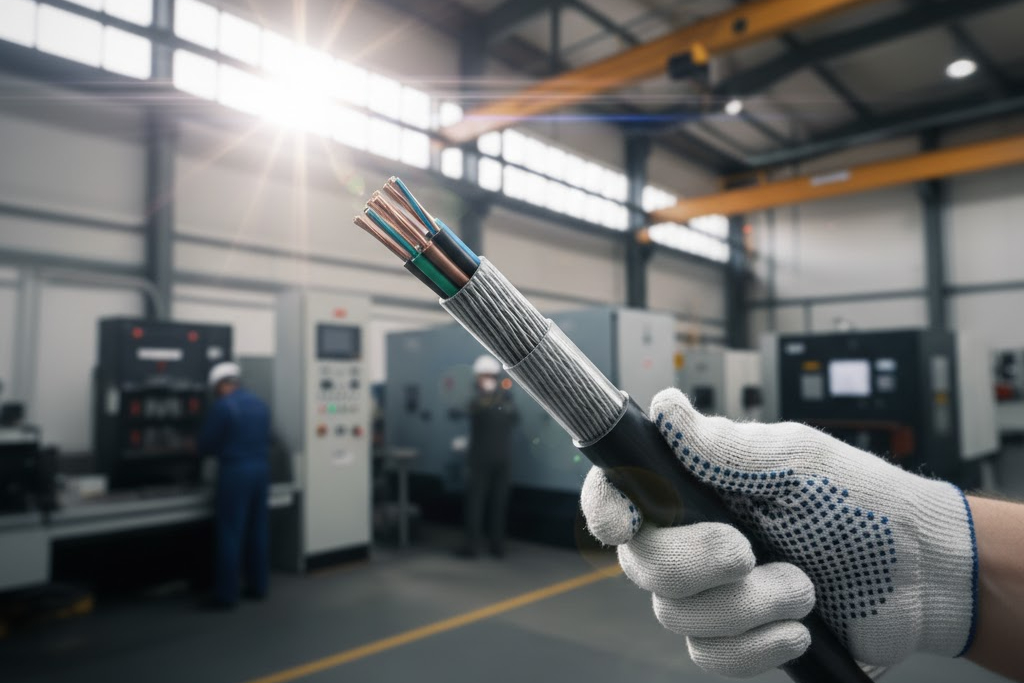
SY cables are often recognised by its steel wire braided (SWB) construction, which is a flexible, multicore control cable. Designed for control circuits, instrumentation, and low-voltage power distribution, it excels in environments exposed to mechanical stress. Its transparent sheath allows quick inspection of the inner cores and braid integrity, an asset for maintenance and troubleshooting.
Construction and Industry Standards
Key Components
- Conductor: Class 5 fine stranded copper
- Core Insulation: PVC, colour-coded or numbered
- Inner Bedding: Flexible PVC layer
- Braiding: Galvanised steel wire for mechanical shielding
- Sheath: Clear PVC outer jacket
Voltage and Compliance
- Rated Voltage: 300/500 V (standard); some up to 600/1000 V
- Standards: Typically follows VDE 0250. Not certified under British Standards
SY Cable Performance Metrics
Core Strengths
- Flexibility: Ideal for mild to moderate movement
- Temperature Tolerance: −15 °C to +70 °C
- Shielding: Steel braid reduces electromagnetic interference
- Tensile Strength: Enhanced by armoured braiding
- Chemical Resistance: Performs well in oily and damp environments
Benefits in Industrial Environments
SY cable’s design offers several real-world advantages:
- Quick Inspection: Transparent sheath simplifies fault diagnosis
- Durability Under Stress: Handles knocks, abrasion, and vibration well
- Versatile Applications: From panel wiring to moving machinery
- Additional Safety Layer: Steel braid can aid bonding when properly grounded
- Reliable Lifespan: Withstands frequent use without significant wear
Common Use Cases
SY cable finds its place across many sectors:
1. Control and Automation
Ideal for wiring control panels, PLCs, and motor drives due to its interference protection and flexibility.
2. Machinery and Manufacturing
Perfect for plant equipment subject to movement or vibration, conveyor belts, robotics, and packaging lines.
3. Building Services
Used for lifts, HVAC systems, and building control systems.
4. Temporary Setups
Popular in test rigs or temporary power/control setups thanks to its visibility and handling.
Installation Tips
Get the most from your SY cable by following best practices:
- Precise Stripping: Avoid nicking copper strands
- Use Glands and Ferrules: To securely grip the braid and core
- Outdoor Use Needs Protection: SY cable isn’t UV stable, so it must be sleeved or conduited outdoors
- Don’t Rely on the Braid as Earth: It’s not recognised as a CPC
- Respect Bend Radius: Minimum 6× outer diameter to avoid internal damage
Limitations to Be Aware Of
Despite its strengths, SY cable isn’t without limits:
- Not UV-Stable: Must be protected outdoors
- Steel Braid ≠ Legal CPC: Not compliant under BS 7671
- Variable Quality: Some lower-grade cables have poor braid density
- Toxic Smoke in Fire: Standard types emit harmful gases; LSZH versions are safer indoors
Frequently Asked Questions
1. Can I run SY cable outdoors?
Yes, but it must be enclosed in a UV-resistant conduit or ducting.
2. What’s the difference between SY, CY, and YY cables?
- SY: Steel braid for mechanical and limited EMI protection
- CY: Copper braid for superior EMI protection
- YY: No braid, used in low-risk, interference-free environments
3. Does SY cable meet British Standards?
Not officially. It’s widely accepted in practice, but not certified under BS 7671. Proper containment and risk assessment are required.
4. Is it fire-safe?
Standard SY isn’t. Use LSZH (Low Smoke Zero Halogen) for enclosed or public spaces.
5. How much current can it carry?
Depends on size and installation. For example:
- 1.0 mm²: ~12 A
- 2.5 mm²: ~30 A
- Check manufacturer data for specifics.
Final Thoughts
SY cable remains one of the most practical solutions for industrial cable wiring, offering reliable performance, protection, and versatility. While it has limitations, particularly around outdoor use and fire safety, it remains a popular choice thanks to its mechanical strength and clear visual design.
